Famous indian artists paintings
FAQs
Q.1 What are Indian art paintings?
Paintings found across India provide a window into the country’s many cultures and their spiritual and social histories. Artists throughout the centuries have used their paintings to create a visual record of history.
Q.2 How are Indian art paintings categorised?
There is no single style that can be used to identify paintings from across India; each style has its own distinct vocabulary.
Geometric patterns are characteristic of Madhubani paintings, which depict mythological narratives and Hindu rituals.
The Warli paintings depict tribal life and the agricultural cycle through monochromatic designs.
Devotional paintings are created in the Tanjore style. Rich textures and golden inlays are common in these paintings.
Legends of Krishna are represented in Pichwai paintings in a multi-tiered setting.
Q.3 What makes Indian paintings special?
Indian paintings exhibit a rich diversity of traditions and styles. The styles have their own unique sensibilities.
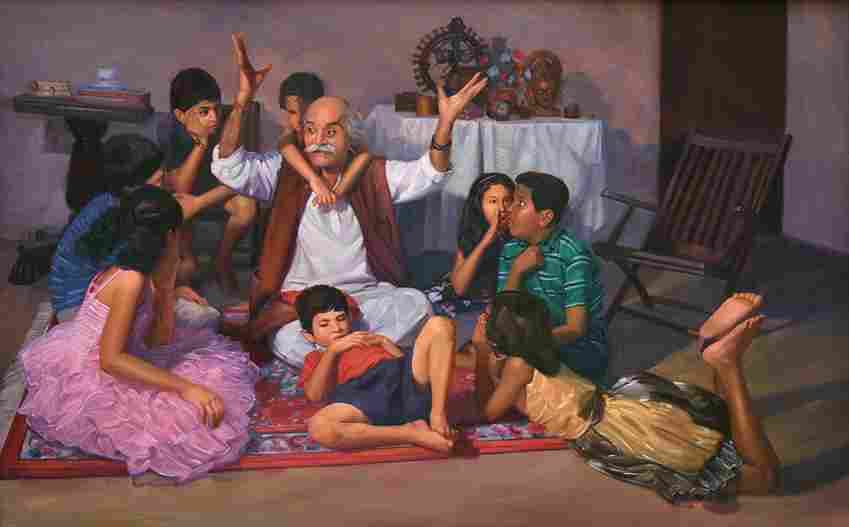
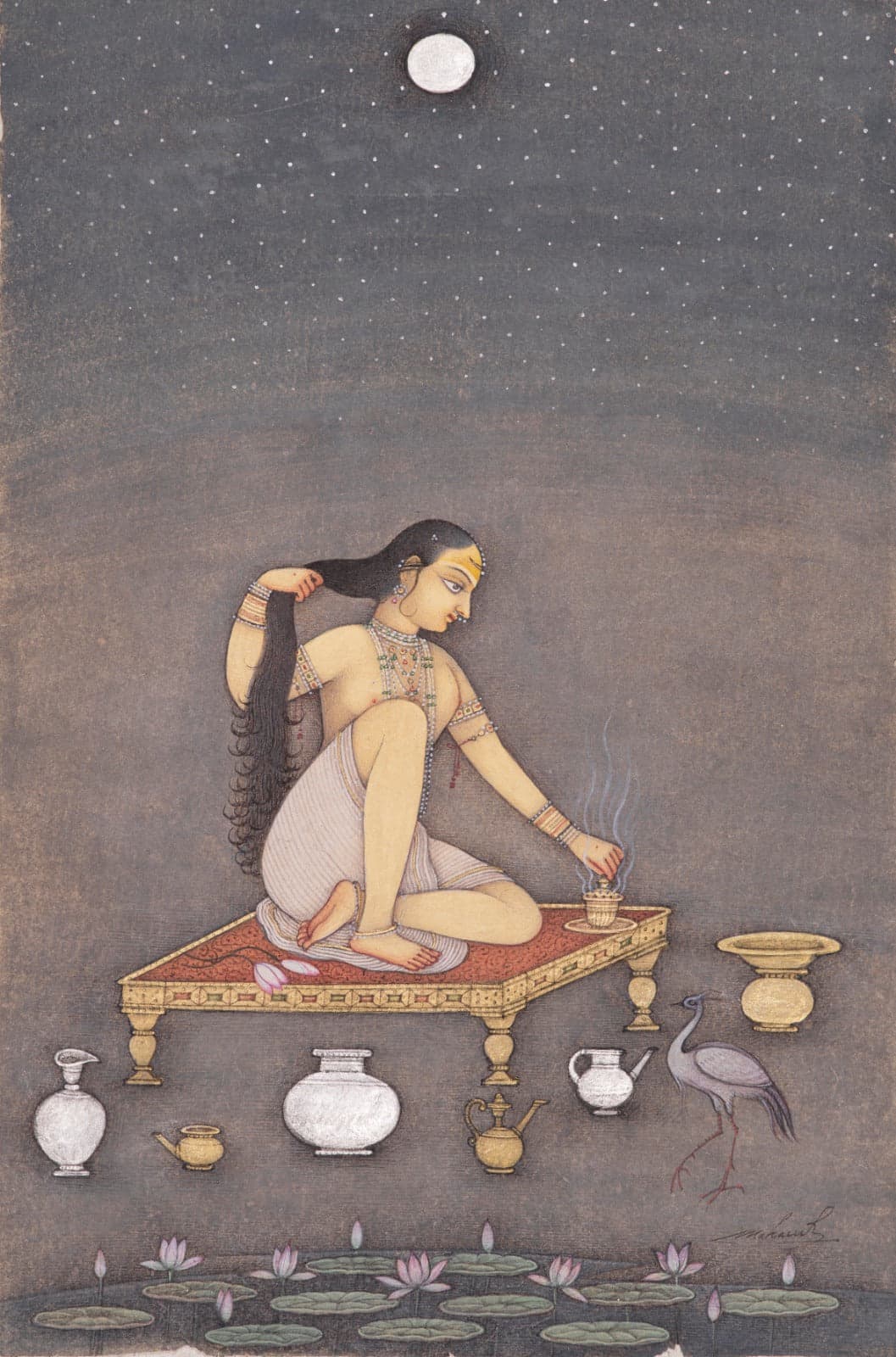
The most renowned Indian artists paintings are recognized for creating a distinct style that is recognizably their own. Each Famous indian artist, including Raja Ravi Varma, Amrita Sher Gil, M.F. Husain and Jamini Roy, used their regional style as a launching pad while also demonstrating their knowledge of world art. They fused other styles with their classical heritage.
What sets their work apart:
Medium mastery: a number of prominent Famous Indian artists trained in multiple styles, incorporating components of miniature paintings of India and European academic styles and techniques, to develop a new style.
Cultural specificity: the subjects portrayed (Indian mythology, rural life, women, and the history of the nation) are grounded in the experiences of the Indian subcontinent.
Recognition by collectors and institutions: works by leading Famous Indian artists are represented in national museum collections, private collections, and international auction houses, thereby confirming their value.
Choosing the Right Painting.
Q.4 How do we decide which painting would be more appropriate for a modern vs. a traditional Indian house?
The appropriateness of a painting is determined by the overall style of the interiors. For a modern house, abstract or semi-abstract styles would integrate best; for a traditional house, classical and figurative styles would integrate best.
For modern houses, Warli art, abstract Madhubani, and more abstract contemporary Indian art would integrate well into modern or Scandinavian interiors.
For traditional houses, Tanjore, Pichwai, and Mughal Miniature paintings would integrate well with traditional interiors and design elements, such as wood and textiles.
For interiors in the middle, Pattachitra and Kalighat paintings would be most appropriate.
Q.5 How do we decide which Indian art painting would best suit our house?
It is important to evaluate the existing palette, the size of the space, the style of the existing design, and the reason we are buying the art (whether decorative, cultural, or devotional).
A useful selection framework:
Measure the wall space: Panoramic artwork is well suited to large walls, and vertical formats work best for narrow walls.
Choose a color palette: Works should have dominant colors that either align with or contrast the existing room colors.
Consider the theme: Pichwai paintings and Tanjore paintings are usually found in prayer rooms and/or entryways. Landscape, figurative, and pictorial works are great selections for living and dining areas.
Consider the medium: Original paintings are one-of-a-kind and add value to a room, whereas printed reproductions are more affordable and still of high quality.
Q.6 Where is the best place to display an Indian art painting in my home?
Works should be placed at eye level on a wall that is not obstructed by surrounding fixtures. The space should be well lit and not compete with the room's focal point. Finally, placement should be determined by the subject and the painting's tradition.
Recommended Placements by Room:
Entryway or foyer: auspicious symbols and Ganesha, Madhubani, and Tanjore paintings create a welcome tradition.
Living room: Above the sofa or on a console, consider a large scale Pichwai, Pattachitra, or another work of contemporary Indian figurative art.
Bedroom: A soothing atmosphere is created with soft paintings and muted color palettes, such as floral designs in Kalamkari.
Prayer room: Devotional paintings of Tanjore and Pichwai are appropriate for a spiritual space.
Q.7 What size should I look for in an Indian art painting for my living room or bedroom?
For living rooms, most walls accommodate paintings sized 24 × 36 inches to 36 × 48 inches, and in bedrooms, 18 × 24 inches to 24 × 30 inches are generally good. However, these should be determined by the wall and furniture arrangement.
General sizing guidelines:
Indian art painting size: Approximately 60% to 75% of the width of the furniture it sits above.
Gallery walls: For collections of Indian art paintings, maintain a consistent frame depth and leave 2-3 inches between paintings.
Custom framing and installation may be required for large format original Indian paintings by notable Famous
Indian artists to preserve their structural integrity.
Q.8 What are the differences between original, handmade and printed Indian art paintings?
An original Indian painting is a one of a kind artwork by an artist. A handmade painting is a painting created by a trained artisan. A printed art painting is a copy of an existing art painting that may have been produced using electronic or mechanical means. The values, authenticity, and appropriateness vary tremendously among the categories.
Key differences are:
Original Paintings: These include authentic, identified works by Indian artists and carry the greatest value for collectors, retaining the greatest investment value.
Handmade Paintings: These are crafted in the regional practices of Indian art painting (Madhubani, Tanjore, Pichwai) and are authentic in method and material, but are not attributed to an individual artist.
Printed Reproductions: These are created using mass-production techniques on paper or canvas and do not hold any real value for a collector.
Q.9 How do I take care of my Indian art painting?
Take care of an Indian painting by keeping it out of direct sunlight, away from humid conditions, and cleaning it only with a soft, dry cloth. Framing and displaying a painting under appropriate conditions will keep it in good condition for a long time.
Maintenance guidelines:
UV protection: frames are backed with UV protective glass or acrylic to prevent pigment fading, especially for gold leaf Tanjore paintings and natural dye Kalamkari works.
Humidity control: avoid hanging paintings in bathrooms or in rooms with significant temperature fluctuations.
Cleaning: use a clean, dry, soft bristle brush to lightly dust; chemical cleaners and water should not come into direct contact with painted surfaces.
Professional restoration: For original or antique Indian art paintings, consult an art conservator before cleaning or restoring paintings.
Q.10 Are Indian art paintings appropriate gifts? If so, for what occasions?
Indian art paintings are appropriate and meaningful gifts for occasions that are both personal and long-lasting. These occasions include housewarmings, weddings and their anniversaries, corporate gift-giving, and Diwali.
Gift recommendations:
Housewarming: Gift prints with an evocative traditional village scene or showcasing an auspicious lotus or Ganesha.
Wedding: A large Tanjore painting or Pichwai would be an appropriate and memorable gift.
Corporate: A handmade painting or print framed in a traditional Indian style would be a thoughtful gift with a corporate twist.
Diwali: a gold leaf Tanjore painting or a Lakshmi painting for gifting or displaying.
Q.11 Where can I buy Famous Indian artists paintings?
CraftTatva is one such platform where you can explore and buy. You can discover Famous Indian artists paintings different styles, including traditional, modern, abstract, landscape, religious and contemporary Indian art.
Q.12 What should I look for before buying an Indian painting?
Before buying Indian art paintings, do your due diligence: check the seller, the specifications and proof of the material, whether there is a return policy, and whether original or attributed pieces have documentation of provenance.
A pre-purchase checklist:
Check for authenticity: ensure it is an original, handmade, or printed item, and make sure the listing distinguishes among the three.
Check for details: Look for the medium (natural pigments, acrylic, watercolor), the support (canvas, paper, cloth), and any embellishments (gold leaf, stone inlay).
Check for information on the artisan and the community. Also, look for information about the regional tradition, and for famous Indian artists paintings, look for information on attribution and provenance.
Check the returns and damage policies. Assure yourself that the seller provides secure packaging and insured shipping.
Check for handmade certifications: Look for certifications for handmade items issued by reputable organizations, such as the Handicrafts and Handlooms Export Corporation of India (HHEC) or GI-tagged certifications.
Why shop with us
Worldwide Shipping
Nationwide free shipping by professionals.
Authentic Art
Shop original handmade paintings directly from an artist.
Risk - Free Shopping
Secure transactions. Full peace of mind guaranteed.
Commission an Artist
Get a custom portrait of your loved ones - human or furry.